
Branded collaterals: Structure as signature.
Working with the Sursock Museum meant entering an existing visual language with care. It meant extending and refining its assets to consolidate a coherent house style across applications.
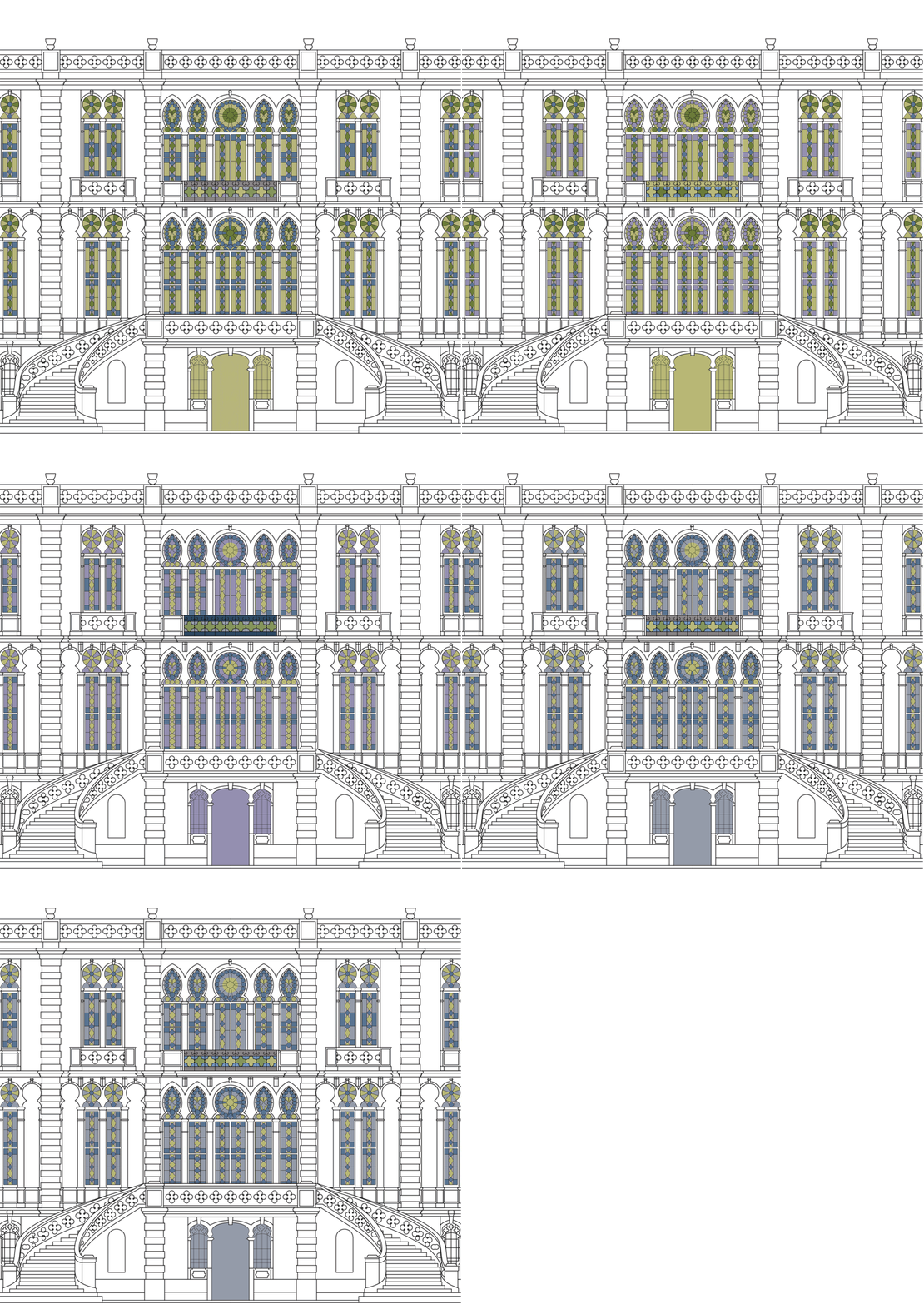
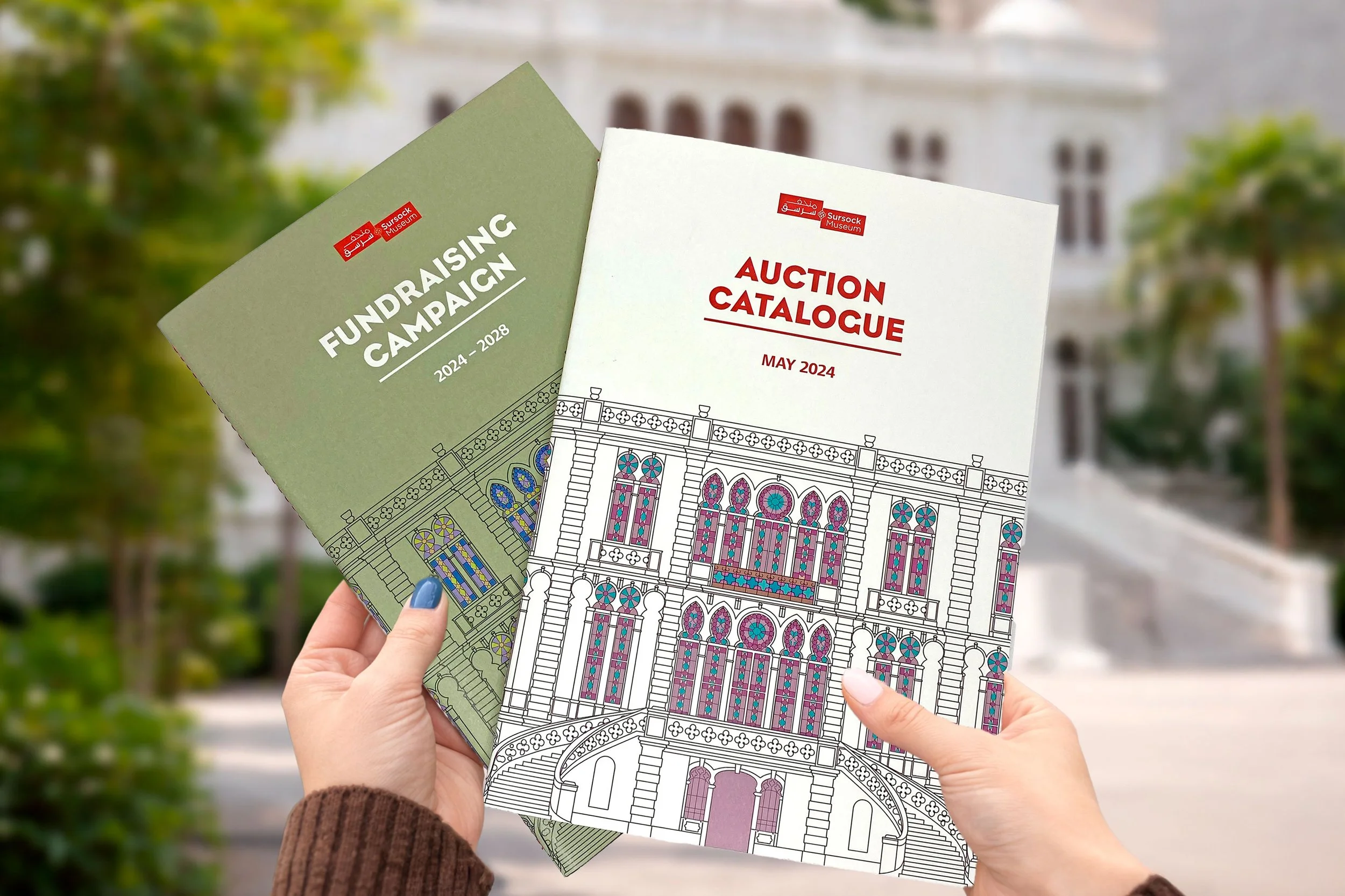
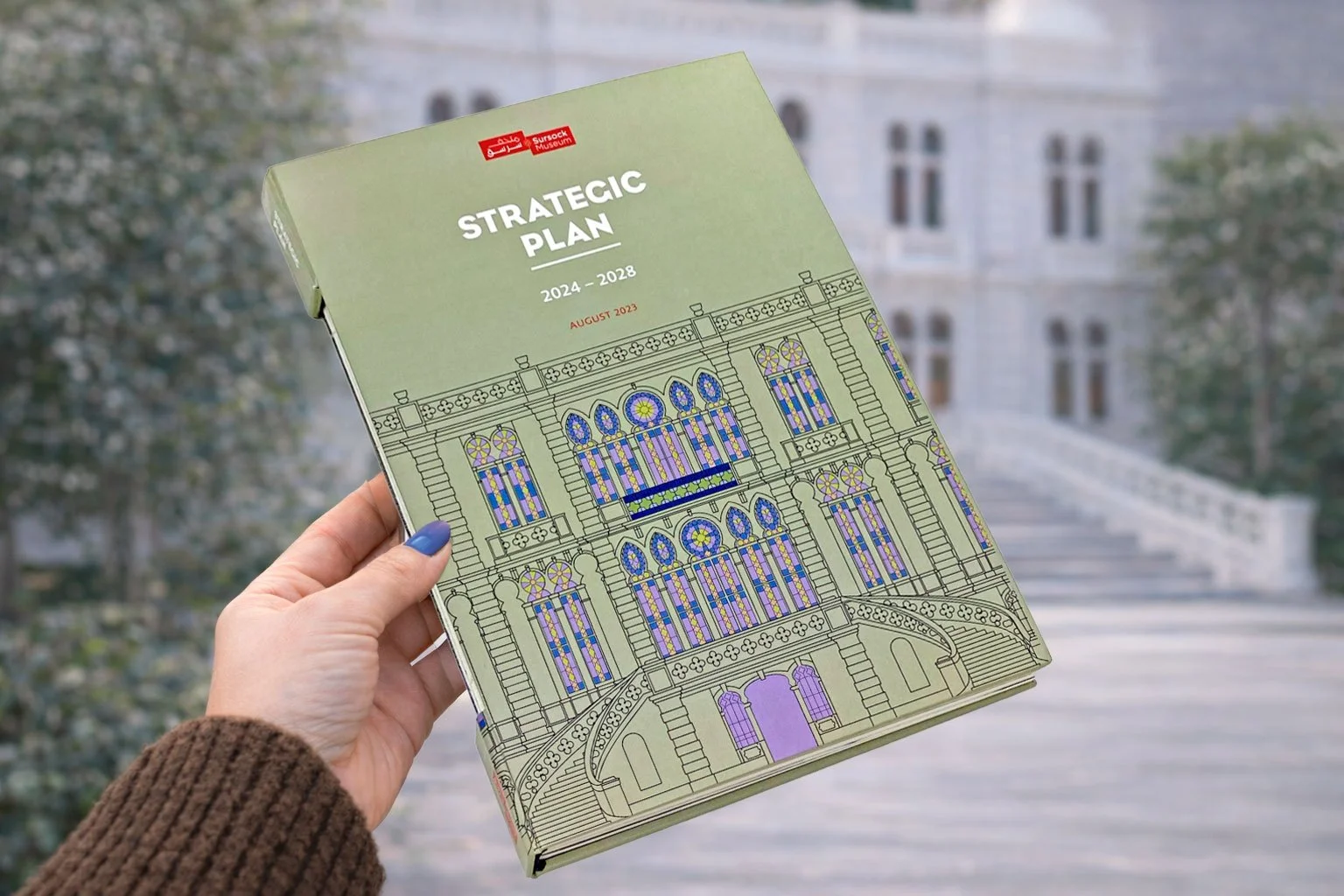
At the center of the identity stands the museum’s façade, the distinguished Beiruti residence built in 1912. Embedded in the institution’s seal, it becomes both anchor and instrument. We developed a series of declinations departing from a precise line drawing: at times restrained and monochrome, at others subtly activated through color, most often by illuminating the stained-glass windows, allowing light to punctuate the structure.
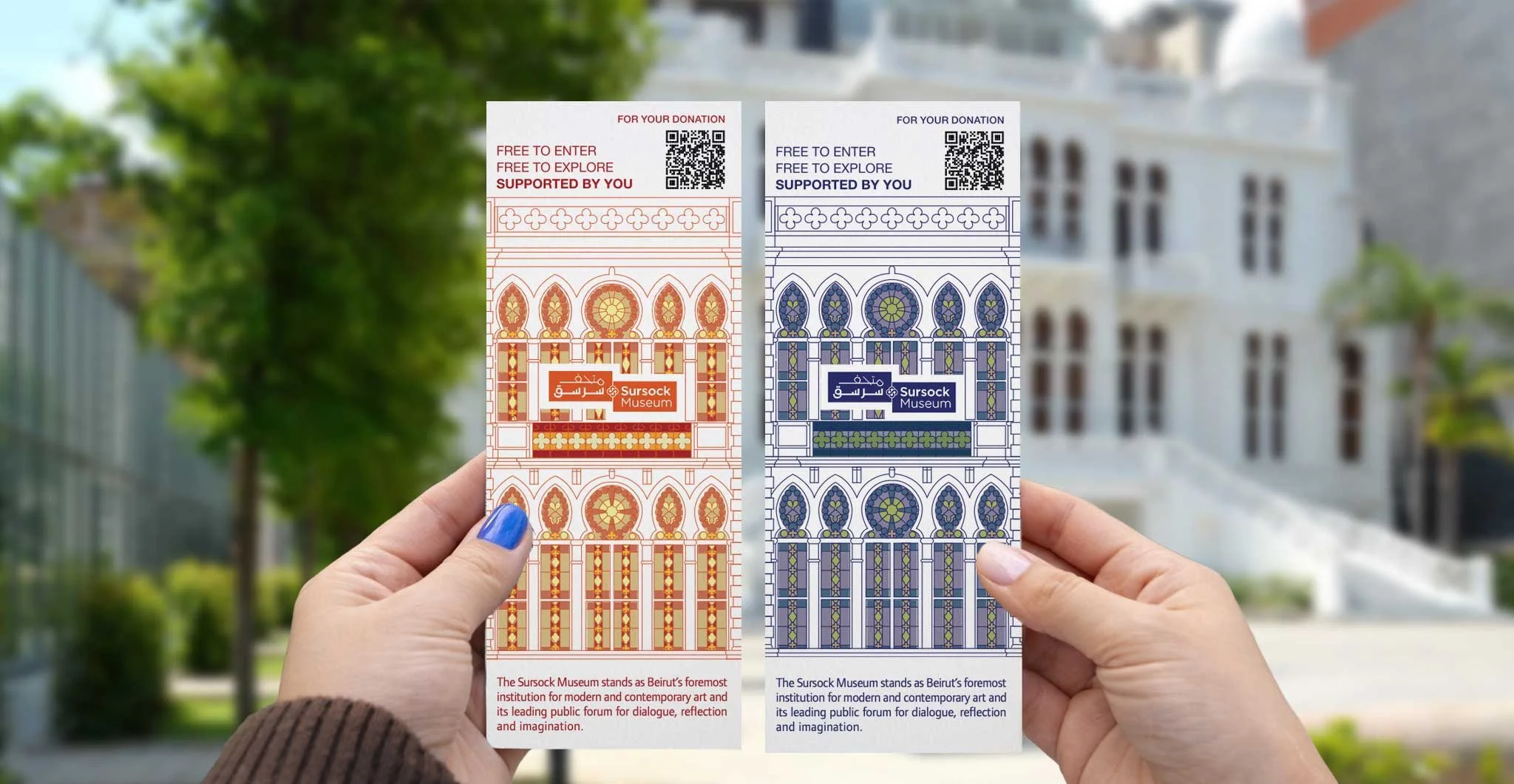
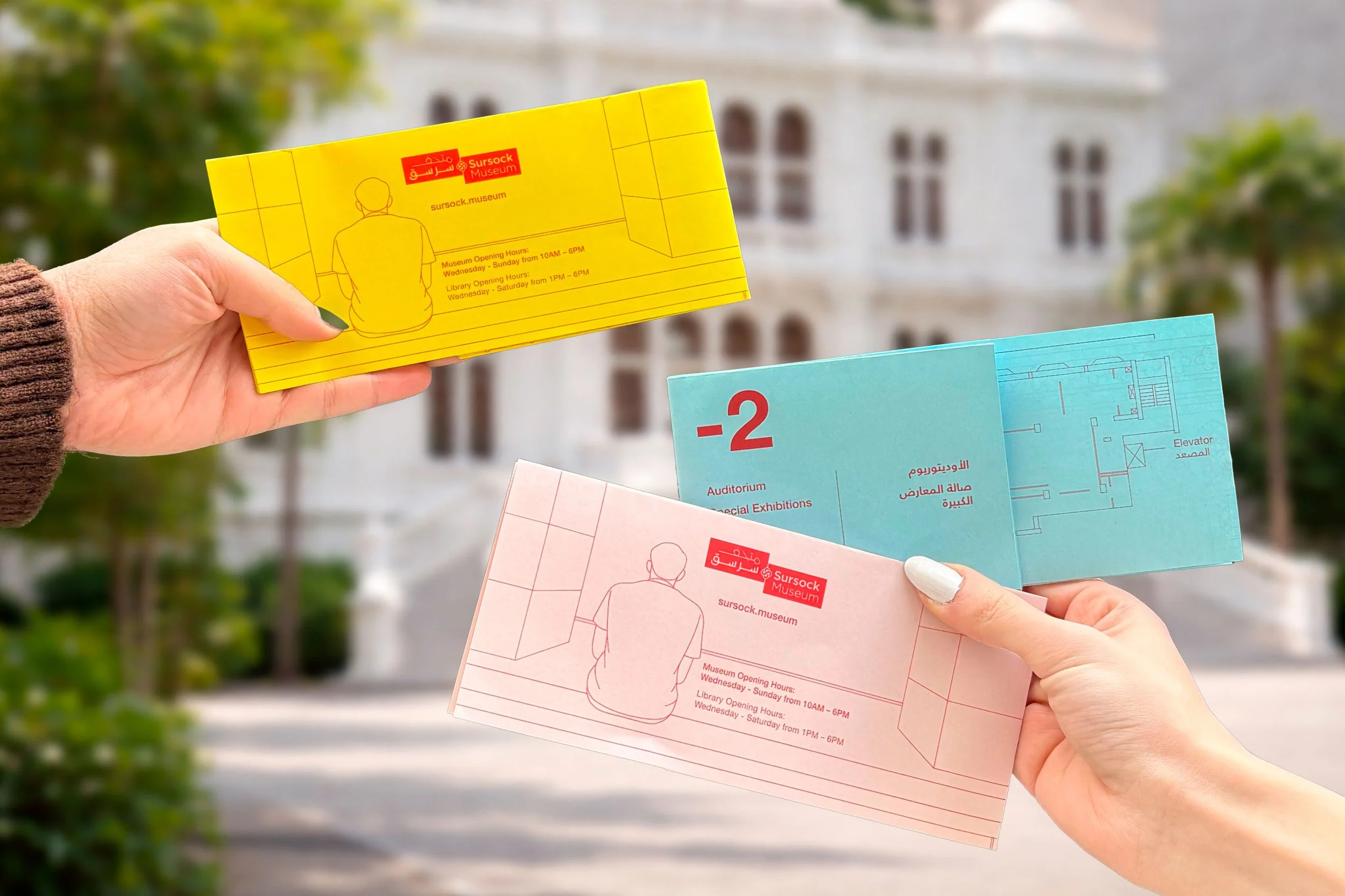
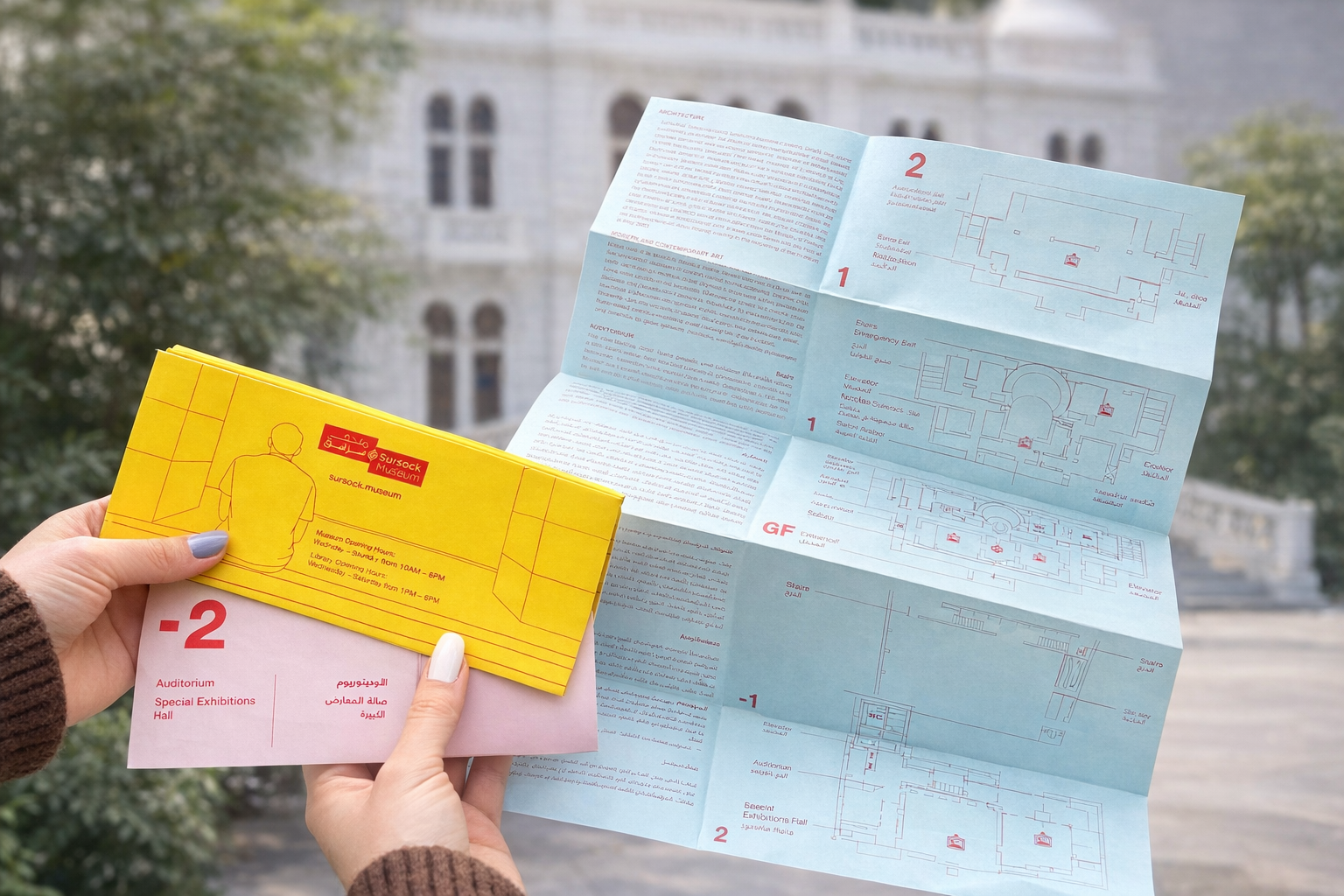
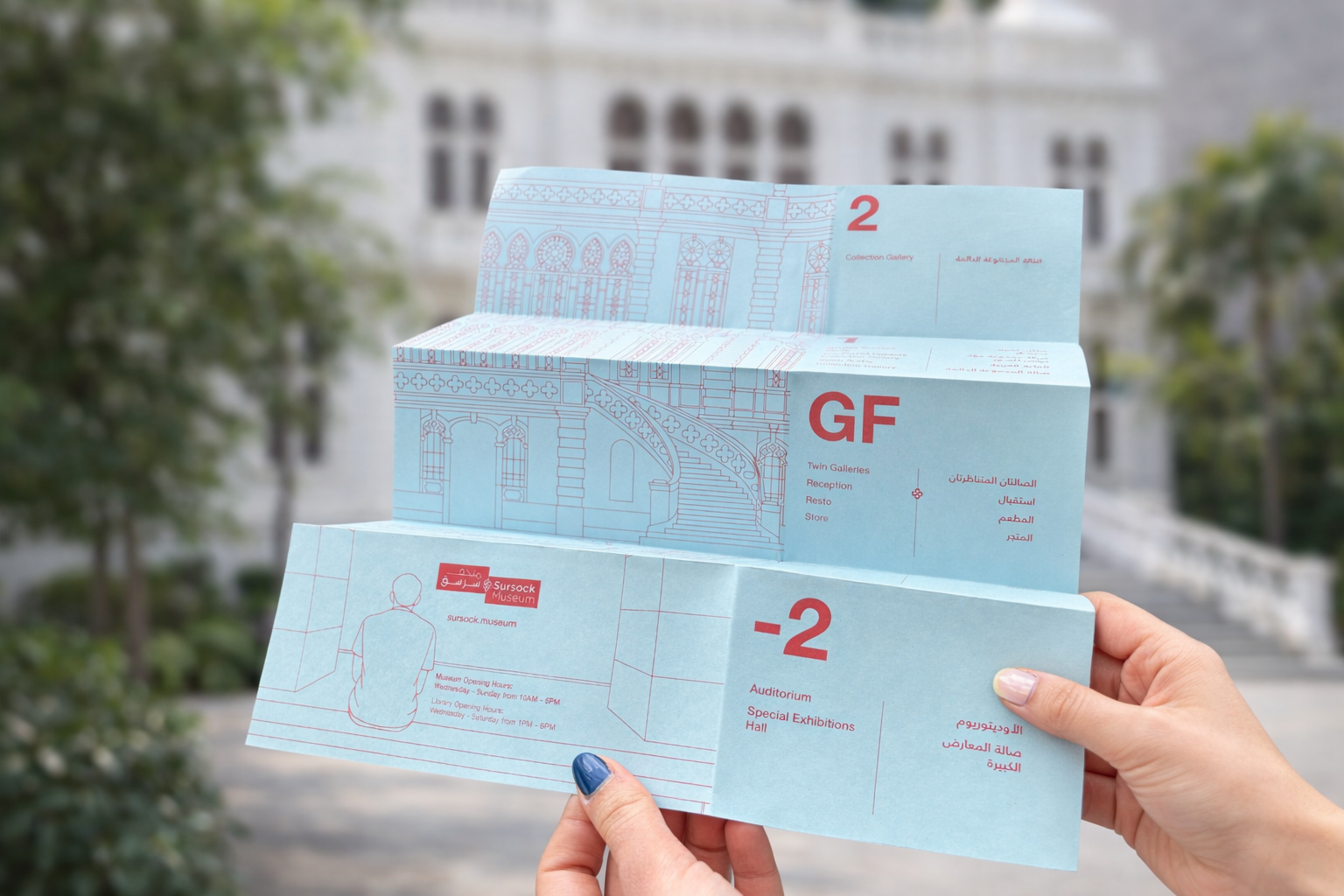
Among the pieces developed, the fold-out map holds a particular presence. Closed, it presents a viewer in front of the largest exhibition space; it then unfolds onto the façade as a unified front. Flipped, the building opens into layered floor maps and spatial descriptions; its interior revealed progressively. The object performs what the museum itself does: it invites entry, orientation, and discovery, transforming architecture into navigation.
What begins as architecture becomes language. Repeated, reframed, and quietly illuminated, the façade sustains the museum’s presence while adapting to its evolving program.
Scope of work